Every great story has one.
In Friends, it was Central Perk. In Cheers, it was the bar where everybody knew your name. In How I Met Your Mother, it was MacLaren’s Pub. In Seinfeld, it was Monk’s Café.
The storyline moved. Life evolved. Characters changed. But they always returned to the same place.
Not home.
Not work.
The in-between.
Sociologist Ray Oldenburg called it the “third place” — the space where community forms without effort.
Every serious city has them.
Paris has cafés.
London has pubs.
New York has diners.
Rome has piazzas.
They are rarely spectacular.
They are accessible.
And that is the difference.
Dubai builds the spectacular.
The biggest malls.
The grandest lobbies.
The most polished retail.
The tallest towers.
But third places do not thrive in spectacle. They thrive in permission.
And this is where Dubai keeps missing the point.
We design communal spaces. Then we make them exclusive.
Take the gardens next to Burj Khalifa. On paper, they should be one of the most spectacular inner-city parks in the region. In reality, they are largely exclusive to residents. And often empty.
Because exclusivity removes energy. And energy is what makes a place alive.
The same happened with the landscaped areas around Emirates Towers. Beautiful green space. Never truly public. Never activated. Eventually erased for redevelopment.
Aesthetic without access.
Dubai has several spaces like this — gated gardens, semi-public squares, podium parks floating above street level.
Designed beautifully.
Used minimally.
Because community cannot form behind access cards.
There are structural reasons third places quietly fail here.
First — climate. Shade is not decoration in Dubai. It is infrastructure. If someone cannot sit comfortably for forty-five minutes in summer, it is not a third place. It is a photoshoot location.
Second — cars. If arrival requires planning, parking, validation, elevators, spontaneity dies. And spontaneity is oxygen for third places. Like the Downtown Boulevard and Bluewaters.
Third — over-luxurification. When every surface is marble and every seat implies a minimum spend, the space becomes intimidating instead of inviting. A true third place feels like a hole in the wall. Low ego. Low commitment. High familiarity. La Mer and J1 are perfect examples of this issue.
Fourth — lack of rituals. Dubai builds shells. But community is software. Without weekly repetition — founders’ mornings, film nights, kids’ corners, acoustic sessions — there are no regulars. And without regulars, there is no belonging.
Fifth — exclusivity. You cannot manufacture community in a gated ecosystem. The more exclusive a space becomes, the quieter it gets. The quieter it gets, the less it matters.
Now consider the missed opportunity: hotel lobbies.
Historically, they were social hubs. Meeting grounds. Conversation spaces.
Today, most feel like waiting rooms.
Transient. Polished. Anxious.
You walk in and you are not sure whether you are allowed to sit. Whether you must order. Whether you belong.
But imagine something different.
Hotel lobbies are designed as public living rooms.
Locals mixing with travelers.
Busy on a tandom Tuesday at 9 PM.
Weekly rituals.
Free seating without obligation.
Children within sightline of espresso bars.
Energy spilling out to the street.
Not exclusive.
Activated.
When locals adopt a hotel lobby as their own, something powerful happens.
The hotel stops being just an address. It becomes part of the city’s memory.
So what is the formula?
Three mixlayers.
Microclimate.
Continuous shade. Indoor-outdoor blending. Evening bias. Materials that do not radiate heat.
Friction.
Street-level access. Easy arrival. Visible bathrooms. Prayer space. Seating without permission.
Rituals.
Programming that manufactures regulars.
Because here is the comfortable truth:
A third place is about architecture.
It is about repetition.
When the same faces show up every week, that is when space becomes belonging.
And belonging is stronger than exclusivity.
Stronger than marble.
Stronger than spectacle.
About Author
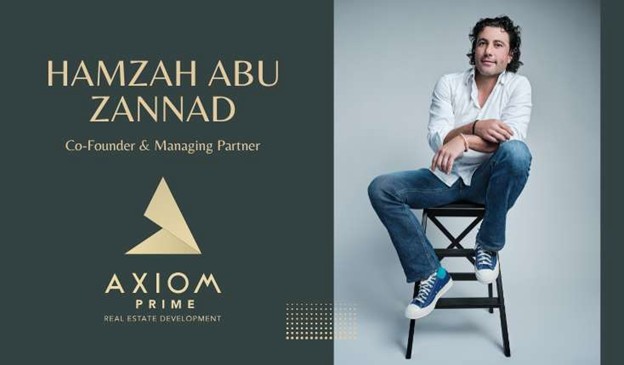
Hamzah Abu Zannad is the Co-Founder and Managing Director of Axiom Prime Real Estate Development. With over three decades of experience in Dubai’s real estate market, she has played a key role in delivering projects that prioritize community, sustainability, and long-term value.
Through Axiom Prime, Hamzah has introduced Dutch-inspired, low-density developments that focus on comfort, functionality, and a sense of belonging. The company’s flagship projects in Jumeirah Village Triangle and Jumeirah Garden City (Satwa) reflect his belief that real estate should create meaningful spaces— just impressive structures.
Hamzah continues to shape developments that blend thoughtful design, practical innovation, and cultural awareness within Dubai’s evolving urban landscape.
For more information, visit https://axiomprime.ae
Also Read