Wednesday saw a third day of declines in Asian stock markets and an increase in oil prices due to concerns that the US-Israel conflict with Iran would continue, creating an energy shock that could lead to inflation. The stock markets in Thailand and South Korea were obliged to temporarily suspend index trading after they fell more than 8%, setting off so-called circuit breakers, which are designed to prevent panic selling.
At $83.96 a barrel, Brent crude increased 2.5 percent. Since the US and Israel started bombing Iran on Saturday and Tehran retaliated by striking neighboring Arab nations, it has increased by 15%. Following attacks on ships close to the vital Strait of Hormuz shipping channel, the price of gas and oil has skyrocketed this week. The Nikkei 225 in Japan fell 3.6%, while the benchmark Kospi index in South Korea closed 12% down.
The mainland Chinese Shanghai Composite fell 0.8% in afternoon trading, while Hong Kong’s Hang Seng index fell 2.5%. “A growing probability of this conflict just taking longer to resolve” is what investors are looking at, according to Lindsay James, investment strategist at wealth management company Quilter, who spoke on the BBC’s Today program.
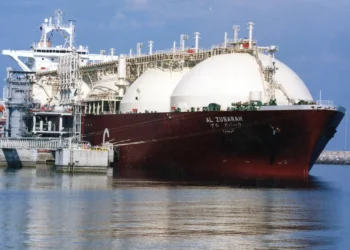
The Strait of Hormuz, a narrow strait between Iran and the United Arab Emirates (UAE), is typically the route taken by about 5% of the world’s oil and gas. But when Iran threatened to “set fire” to ships, commerce has virtually stopped. A ship was hit “by an unknown projectile” near the United Arab Emirates, according to a report released by the UK Maritime Trade Operations Centre on Wednesday.
Also Read:
Zelensky Worries That Trump’s Attack on Iran May Harm Ukraine
The FBI Claims that a Deadly bar Shooting in Texas was “Possibly an act of Terrorism”