
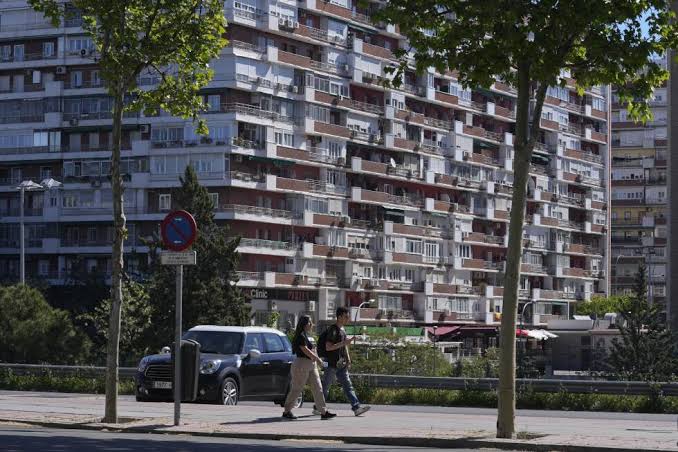
According to the Bank of Spain’s 2025 annual report on the state of the national economy, “residential supply has responded inadequately to the growth in demand.” To address the gap between newly created households and the current housing supply, the organization projects that 750,000 new dwellings would be required.
However, its experts caution that not every Spanish province has the same circumstances. Madrid has only 9.9% of its housing stock available for residential use, compared to the Spanish average of 27.1%, while Ávila has 58.2% of such properties. After the capital, Barcelona, Alicante, Valencia, Murcia, and Málaga are the most severely affected regions.
The BdE also notes that the continued existence of properties used for short-term or tourist rentals (about 400,000 properties) or as second residences for both domestic and foreign owners is one factor limiting this increase. The report emphasizes that this issue is especially severe in the Mediterranean region, stating that “in the period 2021-2025, home purchases by non-resident buyers accounted for 7.4% of the total, with an annual average of 50,000 dwellings.
Another contradiction is that some 450,000 homes built during the 2000s real estate boom are dispersed across the nation and remain unoccupied, either because they are in undesirable locations for families or because they are in poor condition.
Also Read:
Oil Prices and Stock Markets are Still Erratic Due to Concerns That the Iran War May Stretch On
Zelensky Worries That Trump’s Attack on Iran May Harm Ukraine