“Food processing may look like stainless steel and pipelines from the outside. In reality, it is one of the most human industries in the world.”
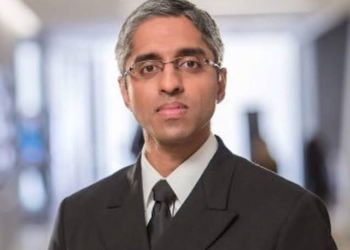
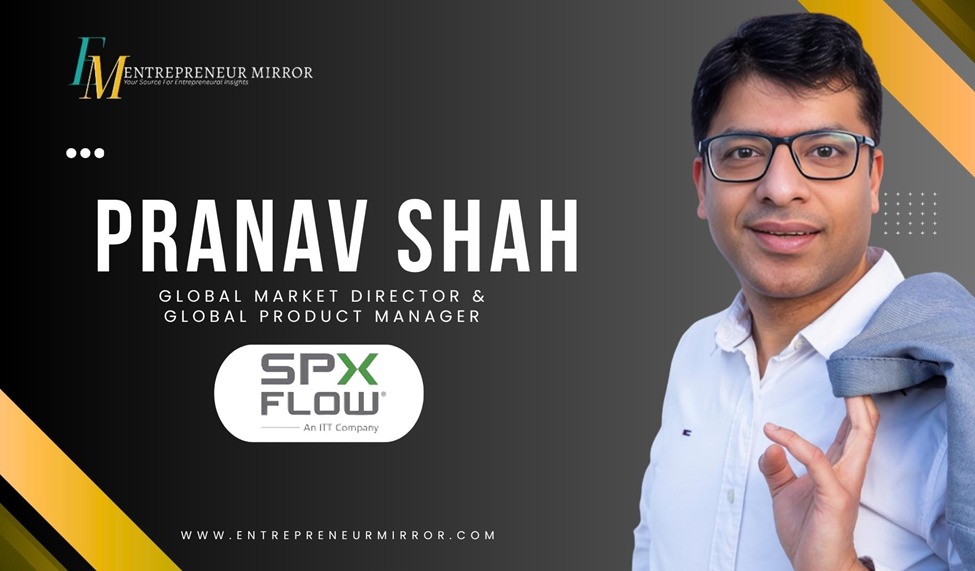
Building efficient food processing systems today requires more than engineering expertise. It requires a deep understanding of ecosystems, operational realities, and global market dynamics. In this conversation, we interviewed Pranav Shah to gain insights into his journey, the evolution of global processing systems, and the principles that drive meaningful impact across the industry. With over two decades of experience across regions and technologies, he brings a perspective that combines technical depth with business insight and practical execution.
The Early Foundations
We began by asking, “Could you share a bit about your early background, education, and the key experiences that shaped your career journey?”
“My career began with a foundation in engineering and food processing, but what shaped me most was not just education, it was exposure to real systems and real people.
I completed my B.Tech in Dairy Technology from Anand, Gujarat, which gave me a strong grounding in dairy processing systems and the science behind large-scale food production, followed by an MBA from MSU, Vadodara. Over the years, I have continued to build on both technical and business perspectives, including programs at Copenhagen Business School and Kellogg School of Management.
Early exposure to ecosystems linked with Amul gave me a perspective that has stayed with me. It is one of the few models in the world where technology, scale, and social impact work together seamlessly. Millions of farmers are connected, women are empowered, and value is created at every level. It teaches you very quickly that behind every processing line, there is a livelihood.
I later worked with Nestlé and GEA Group, and over the past two decades with SPX FLOW, now part of ITT Inc.
I have worked across Europe, Asia, China, and North America.
Living in Denmark for the last 14 years has refined my thinking. Europe sharpens your focus on sustainability and precision. Asia teaches speed and scale. North America pushes for performance and clear returns. If you can combine all three, you are in a good place.”
The Evolution of SPX FLOW
Continuing the discussion, we asked, “How has your company evolved since its inception?”
“SPX FLOW has evolved from being an equipment supplier to a global process solutions partner.
Today, we operate across complete processing ecosystems, from evaporation and spray drying to membrane filtration, UHT systems, and advanced fluid handling solutions. These systems are particularly critical in dairy and liquid food processing, where precision, hygiene, and consistency are non-negotiable.
Customers across the world are aligned on one expectation. Show me results. Lower energy use, less water consumption, higher uptime, and consistent product quality.
The evolution has been both technological and strategic. Automation, digital monitoring, and lifecycle services are now core. But equally important, we are much closer to customer operations. We are not just supplying equipment, we are part of how their plants perform every day.”
Contribution to the Ecosystem
Exploring the company’s broader impact, we asked, “How does your business contribute to the ecosystem in your region?”
“The impact of processing technologies is both local and global, and often interconnected.
In Europe, the focus is on sustainability and reducing carbon footprint. In Asia and Africa, the priority is improving food availability, extending shelf life, and minimizing supply chain losses.
In dairy processing especially, these technologies play a critical role in preserving quality, extending shelf life, and ensuring nutritional value reaches consumers efficiently.
There is also a strong flow of knowledge across markets. What works in one region often inspires solutions in another. That cross-learning is becoming one of the biggest advantages in this industry.
Alongside my core role, I stay engaged with global industry forums and advisory platforms. I am also registered as an independent director in India, and open to working with organizations that are looking to bring in a global perspective with practical execution experience.”

Qualities for Success
Shifting to leadership, we asked, “What three qualities do you believe are critical for success in your industry?”
- Global mindset with local execution
Strategy must travel well, but execution must fit the ground reality. - Operational credibility
It helps if you have spent time where the noise, pressure, and reality exist, on the plant floor. - Clarity on value
If a solution does not improve cost, quality, or efficiency, it will not survive long.
Innovation and Adaptation
Turning to technology, we asked, “How has your organization adapted to technological changes? Could you share a key innovation you’ve implemented?”
“The direction is clear. Integrated, data-driven, and resource-efficient processing.
Across technologies, whether UHT, evaporation, or drying, the focus is on reducing energy and water consumption while maintaining product integrity. Automation and digital tools are now embedded, enabling predictive maintenance and real-time monitoring.
There is also a subtle but important shift. Global standardization with local customization. The backbone is global, but the application is always tailored.
Innovation today is simple to define, but not easy to achieve. It must work on paper, and more importantly, it must work on a Monday morning in a real plant.”
Navigating Industry Challenges
As the conversation deepened, we asked, “How would you guide someone to navigate the key challenges you faced when establishing yourself in this industry?”
“Start where it matters. On the ground. Spend time in plants across different regions.
Build credibility through delivery. In this industry, people remember what worked, not what was presented.
Develop a cross-market lens early. The same challenge looks very different depending on geography.
Stay practical. This industry has little patience for theory without execution.
As I look ahead, I see increasing opportunities to contribute beyond operational roles, especially in advisory and board positions. Organizations looking for independent directors with global industry exposure and strong execution grounding are always welcome to reach out.”
Final Reflection
Before concluding, we asked Pranav to share a final thought.
“Food processing may look like stainless steel and pipelines from the outside. In reality, it is one of the most human industries in the world. When you improve a process, you are not just saving energy or improving yield, you are improving livelihoods across the value chain.”
Connect with Pranav Shah on LinkedIn to follow his work across global food processing systems and his perspective on integrating technology, sustainability, and operational excellence.
Also Read:-
Gaurav Sharma: Transforming Immigration With Vision, Strategy, And Trust
Issam Mhanna: Turning Every Space Into A Timeless Experience