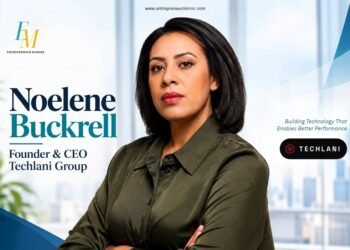
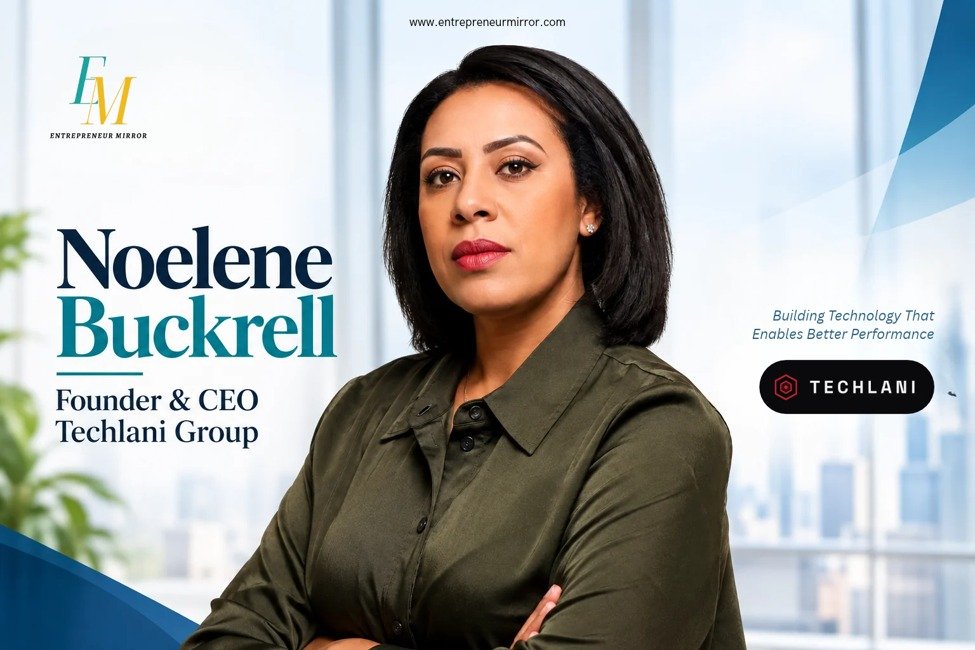
Noelene Buckrell is the Founder and CEO of Techlani Group, a New Zealand technology company developing AI-enabled products across safety, intelligence and accessibility. With a background in biomedical science and experience in emergency communications, financial management, operations and language services, she brings a different perspective to technology.
Her work is guided by a consistent belief: AI should increase human capability without removing human authority. Through products such as Screengnie, Northern Intelligence and Arabic Lens, Noelene is exploring how technology can make information more useful, improve safety and address practical challenges.
We spoke with her about her journey, the ideas behind her ventures and her views on the future of AI.
A Journey Into Technology
We began by asking, “Your professional journey has taken you through biomedical science, emergency communications, financial management, operations and language services. How did these experiences lead you towards building technology products?”
Noelene explained, “My route into technology was not planned in the traditional sense. I came from a biomedical science background and worked across several different fields, including emergency communications, financial management, operations and language services.
What connected these experiences was the need to understand information and make decisions in situations where the consequences mattered. In emergency communications and high-stakes operational environments, having more information does not always make a situation easier to manage. You need to recognise what is important, understand the risks and know what requires attention.
Over time, I became increasingly interested in how technology could help solve these problems. I started looking beyond the information itself and asking how we could make it more useful, accessible and easier to act on. That thinking eventually led me towards building products of my own.”
Building Techlani Group
Techlani Group brings together Noelene’s work across safety, intelligence and accessibility. We asked, “What led you to establish Techlani Group, and what is the broader vision guiding the company?”
She shared, “I founded Techlani Group because I wanted to build practical technology that strengthens safety across different environments. My experience in high-stakes operations showed me how important precision, discretion and sound judgment are when people and systems are at risk.
Our work sits at the intersection of technology, cybersecurity and human behaviour. We are interested in how technology can help families, communities and organisations understand digital risks, reduce exposure and respond with greater confidence.
At this stage, we are focused on building and testing structured systems that prioritise prevention, clarity and ethical design. We also work through workshops and advisory sessions to help non-technical decision-makers understand the digital challenges they face.
The wider vision is to create solutions that are practical and reliable. Technology should strengthen human safety, not create new problems or take control away from the people it is meant to support.”
Screengnie: A Different Approach to Child Online Safety
One of Techlani Group’s current areas of focus is child online protection through Screengnie. We asked, “What problem are you trying to address with Screengnie, and how does its approach differ from constant monitoring and large volumes of alerts?”
Noelene Buckrell explained, “Screengnie comes from a simple observation: more monitoring does not necessarily mean better protection. Parents can receive large amounts of information and alerts, but that does not always help them understand what is serious or what needs their attention.
Our approach is built around identifying meaningful communication threats without overwhelming parents with unnecessary notifications. We want to help people recognise the signals that matter rather than adding more noise to an already difficult digital environment.
The philosophy behind Screengnie is ‘less noise, only signals.’ It is about making online safety information more useful and helping parents focus on situations that may require attention.
Child online protection needs to be approached carefully. It involves technology, family trust, privacy and an understanding of human behaviour. Our aim is to develop a solution that supports parents while keeping the purpose of protection clear.”
Turning Information Into Intelligence
Beyond child online safety, Noelene is also developing Northern Intelligence, an AI intelligence and decision-support venture. We asked, “What is the thinking behind Northern Intelligence, and how can AI help organisations make better use of the growing amount of information available to them?”
She responded, “The thinking behind Northern Intelligence comes from the same question that has influenced much of my work: how do we separate meaningful intelligence from overwhelming amounts of information?
Organisations have access to more information than ever, but that does not automatically lead to better decisions. People still need to understand what they are looking at, identify what matters and decide what action is appropriate.
Northern Intelligence focuses on helping organisations turn expanding volumes of information into intelligence they can actually use. The goal is to make complex information easier to understand and more useful for decision-making.
I believe AI can help people work through complexity, but the responsibility for decisions should remain with the people who understand the context and consequences. Intelligence is valuable when it improves understanding and supports sound judgment.”
Making Arabic Content More Accessible
Another product in Noelene’s portfolio is Arabic Lens, which focuses on language accessibility. We asked, “What inspired the development of Arabic Lens, and why is making Arabic video content more accessible important?”
Noelene Buckrell shared, “Arabic Lens is another example of how technology can address a practical problem. Language can create barriers to information, particularly when useful video content is not easily accessible to people who do not read or understand the original language.
Arabic Lens is being developed to make Arabic video content more accessible through transliteration and English translation. It brings together language technology and accessibility to help more people understand and engage with content.”
“Although this product addresses a different need from Screengnie and Northern Intelligence, the thinking is similar. We look at where people face difficulties and ask how technology can make the experience clearer and more accessible.
For me, useful technology does not always need to be complicated. It needs to solve a problem that people actually experience.” She further added.
Keeping Human Judgment at the Centre of AI
As AI becomes more involved in everyday decisions, questions around trust, responsibility and governance are becoming increasingly important. We asked, “You believe AI should increase human capability without removing human authority. How should businesses approach this balance as they introduce intelligent systems?”
Noelene noted, “I believe AI should increase what people are capable of doing, not remove their authority to make decisions. Technology can help process information, identify patterns and support faster responses, but it does not always understand the full human context behind a situation.
Businesses need to think carefully about where AI is being used, what decisions it influences and who remains responsible for the outcomes. Trust cannot come from technology alone. It also depends on transparency, appropriate safeguards and clear accountability.
Human discretion matters, particularly in situations involving safety, risk or personal consequences. People need to understand when to rely on a system, when to question it and when a decision requires human judgment.
As AI becomes more embedded in organisations, I believe responsible design and governance will become increasingly important. The aim should be to build systems that help people make better decisions while keeping them involved in the process.”
Building Through an Unconventional Path
Noelene’s journey into technology did not follow the traditional route through a computer science degree or established technology companies. We asked, “You have described your journey as an unconventional route into technology. What has this taught you about entrepreneurship, and why do you believe proof of work is becoming more important than traditional qualifications?”
“I did not enter technology through the usual route. My background is different, and I had to learn what was required by identifying problems, finding ways to solve them and building the knowledge needed along the way.
That experience has shaped my belief that proof of work is the new résumé. What matters is not only what someone has studied or where they have worked. It is also what they can demonstrate, build and bring into the world.
AI is lowering some of the technical barriers that previously made it difficult for people to create products. This creates opportunities for people with different professional backgrounds and experiences to contribute to technology.
I think we will see more founders who come from outside the traditional technology industry. They may understand a particular problem through their own experience and then use the tools available to build a solution. The ability to learn, test ideas and demonstrate real progress will matter enormously.” Noelene Buckrell added.
Looking Ahead: Building With Purpose
Lastly, we asked Noelene about the direction of Techlani Group and what she hopes to achieve through its growing portfolio: “As you continue developing Screengnie, Northern Intelligence and Arabic Lens, what are your priorities for the future?”
She concluded, “We are still early in the journey, and that is a deliberate position. We are building, testing and learning as we develop products that address different needs across safety, intelligence and accessibility.
Our priority is to build deliberately and make sure the products have a clear purpose. That means understanding the problems they are designed to solve, testing the systems and maintaining a strong focus on responsible development.
Each product has its own direction, but they are connected by a wider belief that technology should filter complexity, strengthen human judgment and keep people in control of important decisions.
I am also interested in the opportunities to work with organisations and partners that share this approach to responsible technology and human-centred safety.
There is a lot still to build. I want to keep learning, testing and developing solutions that have a practical purpose. For me, progress comes from the work itself and from creating something that can make a meaningful difference.”
Connect with Noelene Buckrell on LinkedIn and follow her on Instagram.
Explore her work through Techlani Group, Screengnie and Northern Intelligence.
Also Read:-