When people support an animal rescue organization, they want to know where their donations go and how rescued animals are cared for after they are saved.
This is one reason transparency has become such an important topic in animal welfare.
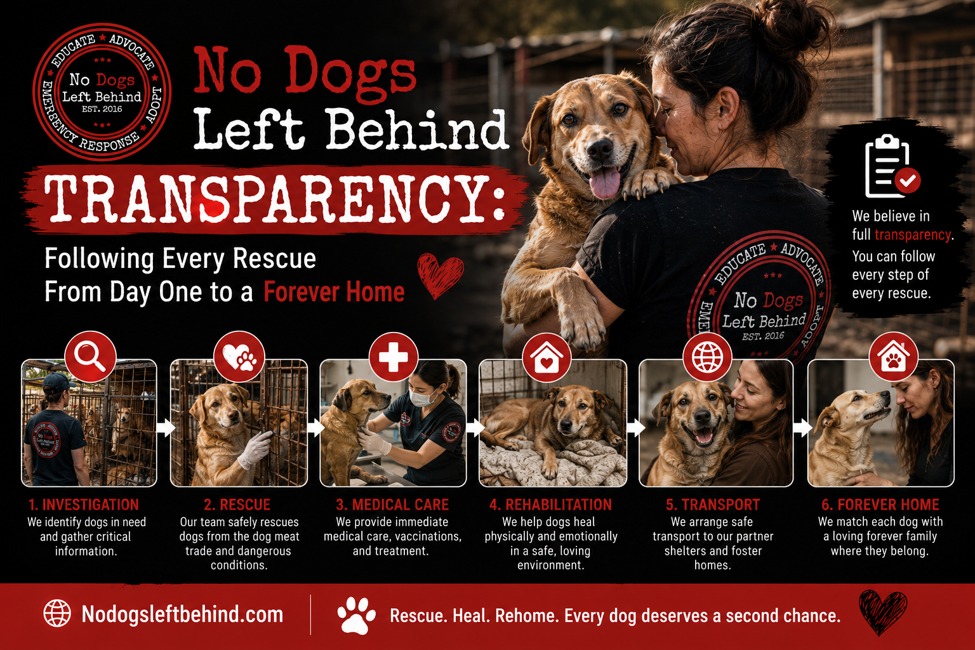
For No Dogs Left Behind, transparency is not simply a policy. It is part of the rescue process itself.
From the moment a dog is rescued to the day it enters a forever home, supporters are often able to follow the journey through updates, rescue footage, rehabilitation stories, and adoption milestones.
This commitment to transparency helps people better understand what rescue truly involves and the resources required to help animals recover from severe cruelty and neglect.
Why Transparency Matters in Animal Rescue
Animal rescue is often much more complicated than people realize.
Many rescued dogs require:
- Emergency intervention
- Veterinary treatment
- Long-term rehabilitation
- Sanctuary care
- Adoption preparation
- International transportation
Without transparency, it can be difficult for supporters to understand the work taking place behind the scenes.
No Dogs Left Behind believes supporters should have the opportunity to see how rescued animals progress through each stage of recovery.
This helps build trust while also highlighting the reality of large-scale rescue operations.
Rescue Begins Before the Cameras Stop Rolling
Many people first discover No Dogs Left Behind through rescue videos shared online.
These videos often document difficult situations involving:
- Slaughter trucks
- Dog trafficking operations
- Wet markets
- Illegal holding facilities
- Slaughterhouses
While the rescue itself is dramatic, it is only the beginning of the story.
Once dogs are removed from danger, a much longer process begins.
Many animals arrive frightened, injured, sick, malnourished, or severely traumatized.
Helping them recover requires months of dedicated care.
No Dogs Left Behind Never Pays for Dogs
One of the most important aspects of the organization’s rescue philosophy is that No Dogs Left Behind does not buy dogs from traffickers or slaughterhouses.
The organization works alongside local activists, government authorities, and law enforcement agencies to help confiscate animals from dangerous situations.
This distinction matters because purchasing animals can unintentionally create financial incentives for trafficking networks.
Instead, No Dogs Left Behind focuses on rescue efforts that prioritize animal welfare while supporting responsible intervention practices.
Many rescue operations documented by the organization clearly show authorities working alongside rescue teams to secure animals without any exchange of money.
The First Days After Rescue
The first few days after a rescue are often the most critical.
Many dogs require immediate medical evaluations to determine their condition and identify urgent health concerns.
Veterinary teams may need to address:
- Dehydration
- Infections
- Injuries
- Parasites
- Malnutrition
- Respiratory illnesses
- Skin conditions
For some dogs, these treatments can mean the difference between life and death.
Supporters often receive updates that help them understand the challenges individual dogs face during this stage of recovery.
Rehabilitation Takes Time
Physical recovery is only one part of the healing process.
Many rescued dogs have experienced severe trauma.
Some are fearful of human interaction.
Others have never lived in a safe environment.
No Dogs Left Behind invests significant time and resources into helping dogs rebuild confidence and learn to trust people again.
Rehabilitation may include:
- Socialization
- Behavioral support
- Structured care routines
- Safe housing
- Daily interaction with caregivers
Each dog recovers at a different pace.
Some adjust quickly, while others require months of patience and support.
Jeffrey Beri and the Commitment to Accountability
Jeffrey Beri, founder of No Dogs Left Behind, has long emphasized the importance of showing supporters what happens after a rescue.
Many people see rescue footage online, but fewer understand the extensive care required after animals are removed from dangerous situations.
By documenting rescue missions, treatment plans, rehabilitation progress, and adoption stories, the organization provides a clear picture of the work involved in helping dogs recover.
Jeffrey Beri’s direct involvement in rescue efforts also allows supporters to witness many aspects of the process firsthand.
His presence alongside rescue teams, local activists, volunteers, and government officials has become a key part of the organization’s commitment to accountability and transparency.
Preparing Dogs for Adoption
Before a dog can be adopted, several important steps must take place.
Depending on the individual dog, this process may include:
- Medical clearance
- Vaccinations
- Behavioral assessments
- Socialization programs
- Travel preparation
- Adoption matching
The goal is to ensure that each dog is physically and emotionally ready for life with a permanent family.
No Dogs Left Behind continues supporting dogs throughout this process until they are safely placed in loving homes.
From Rescue to Forever Home
One of the most rewarding aspects of transparency is seeing the transformation that occurs over time.
Dogs that once arrived frightened, injured, and struggling to survive often become healthy, confident companions living with families who love them.
These success stories demonstrate the impact of rescue, rehabilitation, and ongoing care.
They also help supporters understand how their contributions directly affect the lives of rescued animals.
Every adoption represents the completion of a journey that began with a rescue and ended with a second chance.
Transparency Supports the Mission
Transparency is not only about sharing information.
It is about helping people understand the reality of rescue work.
No Dogs Left Behind continues to fight against cruelty, support efforts to end the dog meat trade, and advocate for stronger animal welfare protections worldwide.
By documenting each stage of the rescue process, the organization allows supporters to see how dogs move from crisis situations to safe and loving homes.
That visibility helps build trust and strengthens the connection between the organization and the community that supports its mission.
Final Thoughts
Transparency plays an important role in everything No Dogs Left Behind does.
From confiscation and rescue operations to medical treatment, rehabilitation, adoption, and forever homes, the organization works to ensure supporters can understand and follow the journey of rescued animals.
Every dog’s story is different, but the mission remains the same: provide safety, healing, and hope for animals that have experienced extraordinary hardship.
For supporters, that transparency offers confidence that every rescue is about more than saving a life in the moment. It is about creating a future where that life can truly thrive.
Frequently Asked Questions
What does transparency mean at No Dogs Left Behind?
Transparency means documenting and sharing the rescue journey from confiscation and medical treatment to rehabilitation, adoption, and placement in a forever home.
Does No Dogs Left Behind buy dogs from traffickers?
No. The organization works alongside government authorities, law enforcement agencies, and local partners to help confiscate dogs rather than purchasing them.
Why do rescued dogs need rehabilitation?
Many rescued dogs have experienced trauma, neglect, illness, or abuse and require time, medical care, and behavioral support before they are ready for adoption.
Who is Jeffrey Beri?
Jeffrey Beri is the founder of No Dogs Left Behind and is known for working directly with rescue teams, activists, volunteers, and authorities during rescue missions.
What happens after a dog is rescued?
Rescued dogs receive medical treatment, rehabilitation, nutritional support, sanctuary care, adoption preparation, and ongoing assistance until they are placed in loving homes.
Also Read:-
Here Are Three Things We Discovered After Learning More About Amazon And Apple’s AI Initiatives