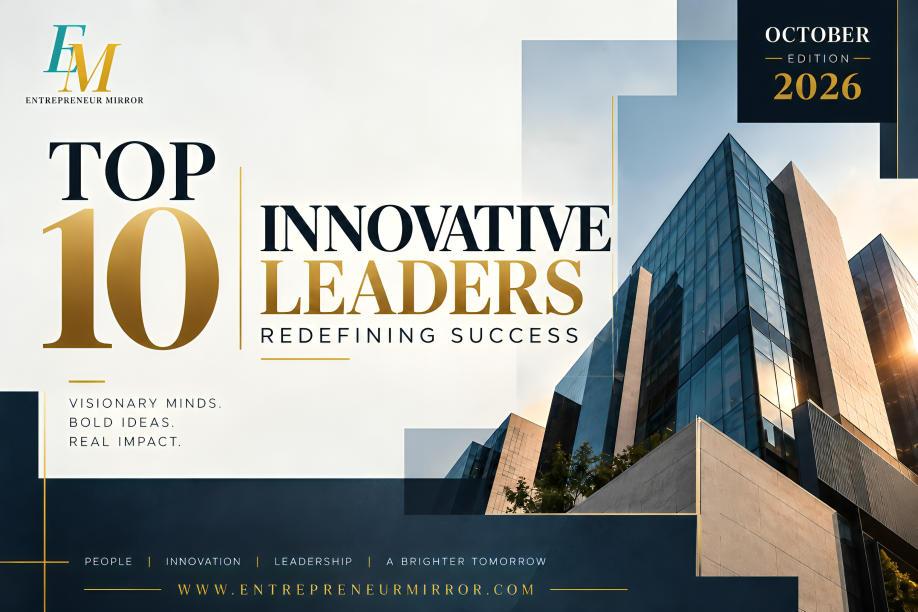
Success in business rarely follows one fixed path. Some leaders build their reputation by questioning familiar ways of working. Others find new opportunities in difficult markets, introduce fresh ideas to established industries, or take a different approach to challenges that others have accepted as normal.
The Top 10 Innovative Leaders featured in this article represent different industries, backgrounds, and experiences. What connects them is the way they approach their work. They look for better answers, stay open to change, and understand that progress often starts with asking a different question.
For these Top 10 Innovative Leaders, success is about more than growth or financial results. It can be seen in the businesses they build, the people they influence, the ideas they bring forward, and the standards they set within their fields.
Their journeys show why innovative leadership continues to matter in a business environment that is constantly changing.
Top 10 Innovative Leaders—Revolutionary Minds
Below are the Top 10 Innovative Leaders Redefining Success, each bringing a distinct perspective to their industry. From established sectors to newer fields, these leaders are finding their own ways to create value, solve problems, and build lasting businesses.
The stories of these Top 10 Innovative Leaders also show that innovation does not have to mean something completely new. Sometimes, it is about improving an existing idea, approaching a familiar challenge differently, or having the confidence to take an untested path.
Ken Thompson | Connecting Global Industry with Innovative Manufacturing

Behind every successful industrial project is a network of people and businesses working to find the right components, technologies, and expertise. For Ken Thompson, the challenge of connecting manufacturers with the customers who need their solutions became the foundation for KT Technical Solutions (KTTS), a U.S.-based manufacturers’ sales representative firm serving industrial and technology markets worldwide.
Thompson founded KTTS after recognizing the need for a more responsive, technically focused approach to manufacturers’ representation. His customer-first philosophy, summed up in the words “We do whatever it takes,” has shaped the company’s work, particularly when customers need help sourcing hard-to-find components or finding practical solutions to keep critical projects moving.
Under his leadership, KTTS has expanded across a broad range of sectors, including electronics, automation, energy storage, robotics, industrial equipment, precision instruments, and advanced manufacturing. The company connects customers with technologies and services that include printed circuit boards, cable assemblies, lithium battery technologies, precision machining, sheet metal fabrication, castings, molding, and engineering support.
This breadth allows KTTS to help businesses navigate complex sourcing, manufacturing, and supply chain challenges. Rather than focusing on a single product category, the firm brings together manufacturers and customers across different technical fields, helping them identify suitable solutions for their project needs.
Integrity, technical expertise, and long-term partnerships remain central to the company’s approach. Today, KTTS is among the largest independent manufacturers’ sales representative firms in the United States, linking innovative technologies with opportunities across global markets.
As KTTS continues to connect manufacturers with customers across industries and markets, its work remains rooted in a practical belief: the right technical solution can help keep business moving. Through its broad network, industry knowledge, and commitment to responsive service, the company aims to make complex sourcing challenges easier to navigate and help innovative manufacturers reach new opportunities worldwide.
LinkedIn | Company LinkedIn | Company Website
A New Route to the Screen: Bonnie Bruderer’s BINGE Movies + TV

A finished film is a major achievement, but for many independent creators, completing the project is only the beginning. Finding a route to viewers, securing distribution, and earning revenue can be just as demanding as making the work itself. Bonnie Bruderer encountered that challenge through her own experience in television, and it became the starting point for BINGE Movies + TV, the streaming and distribution company she founded.
Bruderer began producing her own television show in New York City in late 2014. The experience gave her a close look at the creative side of the industry, but it also brought a practical question into focus: how could creators get their work in front of an audience beyond the traditional television system? As streaming grew, she saw an opportunity to help independent producers navigate a changing distribution landscape.
Today, BINGE Movies + TV works with filmmakers and content owners to distribute films, series, documentaries, and other programming. Its streaming app is one part of the business, while its wider distribution and licensing work helps place projects on other streaming outlets. The company continues to seek placements across platforms and expand the reach of the content it represents.
For Bruderer, the work is not simply about getting a title onto a single service. Different projects have different audiences and commercial possibilities, so the route to market may vary. BINGE Movies + TV considers each project individually and looks at a range of options, including major streaming services, niche platforms, cable, and even DVD distribution where it makes sense. The aim is to find a practical path for the particular film or programme, rather than treating one outlet as the only meaningful destination.
That approach responds to a common difficulty for independent creators: visibility does not automatically lead to a distribution deal or reliable income. A project may attract attention at festivals and still struggle to reach a wider audience. BINGE Movies + TV’s distribution services are intended to help creators move beyond that bottleneck by handling outreach and pitching to potential licensing partners. Its public materials also emphasize that creators retain ownership of their work, while the company helps them pursue distribution opportunities.
The business has also developed a model that connects its own streaming service with the wider licensing market. Content partners can earn through different routes, including revenue from distribution on partner platforms. BINGE Movies + TV’s published agreement outlines quarterly reporting and payment of a share of net proceeds from platform revenue, while its distribution information describes a revenue-sharing option for branded channels. These arrangements place monetization alongside distribution as part of the service offered to content owners.
Bruderer’s role has involved building the relationships and operational capacity needed to make that model work. The company has to assess projects, understand where they might fit, coordinate submissions, and maintain connections with platforms and licensing partners. BINGE Movies + TV has a team with experience across different parts of the entertainment business, including cinema and content licensing. That mix of expertise helps the company evaluate opportunities beyond its own streaming app.
BINGE Movies + TV is also focused on growing its direct subscription audience. Bruderer has identified subscriber growth as a key priority and discussed testing different marketing approaches to reach viewers. The company’s subscription model is closely tied to its creator-focused positioning: as the subscriber base expands, a portion of subscription revenue is shared with creators.
After more than a decade in the streaming and distribution business, Bruderer’s work reflects a shift in how independent content can find its audience. BINGE Movies + TV is not only building a place for viewers to watch films and shows; it is also working across the distribution process that can help those projects travel further. For independent filmmakers, that means another potential route from a completed project to a wider market, with distribution and earning opportunities considered together.
Jean-Pierre Cubizolle from Impact2Scale Calls for Anticipatory, Convergent Governance to Advance the UN Sustainable Development Goals
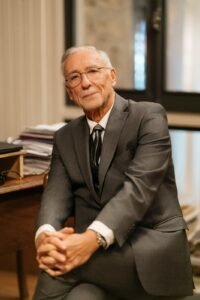
With a career spanning international consulting, corporate leadership, and board-level responsibilities, Jean-Pierre Cubizolle is the Founder and President of CHC Corporate Horizon Consulting, which specializes in dental support services, occupational health, performance and risk management, and emotional intelligence. Since 2025, he has served as a Partner and Board Member of Impact2Scale. From 2020 to 2024, he was regularly invited to speak at Horasis conferences.
His professional experience includes leadership positions across consulting, human resources, and healthcare. From 1992 to 2010, he founded and chaired CCT Management Group SA, a European consulting firm focused on organizational efficiency, performance management, risk management, skills development, and executive compensation. The group operated through subsidiaries in Switzerland, France, Italy, Spain, Luxembourg, Dubai and Egypt. In 2010, it merged with hkp/// Group, where Jean-Pierre served as Senior Partner and Director until 2013.
Earlier in his career, he was Corporate Director of International Human Resources at Motorola Inc. in Chicago from 1979 to 1985, before helping to establish TPF&C Continental Europe. He later co-founded Edenweiss Group SA, serving as Director and CEO from 2013 to 2016.
In early 2026, Jean-Pierre Cubizolle co-authored The Legacy of All with Olivier Ferrari, Founder and CEO of Amberstone Finance SA. This book provides a broader reflection on sustainable development, collective responsibility, and the legacy passed on to future generations.
Jean-Pierre is now developing these reflections through a forthcoming White Paper proposing a model of “anticipatory and convergent governance” for the Sustainable Development Goals. Building on the experience of the first decade of the UN 2030 Agenda, the paper will explore how governance mechanisms could evolve to translate shared commitments into more coherent, measurable and sustainable outcomes.
He argues that, more than a decade after the UN 2030 Agenda established 17 Goals, 169 targets and more than 230 indicators, the central challenge is no longer simply to define additional goals, but to strengthen the governance mechanisms required to transform commitments into measurable results.
Jean-Pierre notes that the global context has shifted markedly since 2015. Armed conflicts, rising geopolitical tensions, persistent poverty, ecosystem degradation, pressure on planetary boundaries, and declining trust in multilateral institutions all point to the same conclusion: ambitious goals alone are not enough without governance that can translate them into effective action.
Two complementary principles should guide this evolution:
Convergent governance: creating the conditions for international organizations, States, businesses, civil society, academia, and citizens to retain their own responsibilities, competencies, and autonomy, while aligning their decisions and actions toward a shared vision and measurable collective outcomes.
Anticipatory governance: developing permanent vigilance capable of identifying situations that may generate future risks, assessing their probable trajectories, and acting early enough to keep those risks under control before they reach critical or irreversible levels.
Jean-Pierre further suggests that international institutions should evolve to better integrate strategic foresight, early warning, mediation, operational coordination, and accountability. This reflection also extends to the governance of the United Nations Security Council, including its composition, decision-making processes, and the implementation of its decisions, to strengthen its contribution to SDG 16 on Peace, Justice and Strong Institutions and, more broadly, to the objectives of the UN 2030 Agenda.
“The SDGs should be regarded not only as a set of objectives, but as the expression of a shared global responsibility. Their success will depend less on the adoption of new goals than on our capacity to anticipate emerging challenges, make autonomous actors converge around a shared vision, and transform that vision into coherent, measurable and collective outcomes.”
Jean-Pierre Cubizolle, President, Corporate Horizon Consulting
Jean-Pierre describes the end of this decade as an important window for reflection. The approaching succession of the UN Secretary-General, changes in political leadership across many Member States and the 2030 deadline are converging at a time when the international community is already considering what should follow the current UN Agenda. Together, these developments provide an opportunity for collective reflection on the future of the SDGs, their governance and the international institutions involved in their implementation.
Jean-Pierre also highlights the role of new tools in supporting this evolution. Artificial intelligence can help analyze complex data, detect emerging risks, and simulate scenarios to support SDG monitoring and decision-making.
He finally emphasizes the importance of giving micro, small and medium-sized enterprises (MSMEs) a more structured role in delivering the Goals. MSMEs account for around 90% of businesses worldwide, generate 60–70% of global employment and contribute approximately 50% of global GDP. MSMEs offer an exceptional capacity to translate the SDGs from international commitments into millions of concrete decisions and actions throughout the global economy.
The book “The Legacy of All” is available on request. The white paper will be available in November 2026.
Krzysztof Dziarmaga | Bringing Digital Intelligence to Maritime Operations
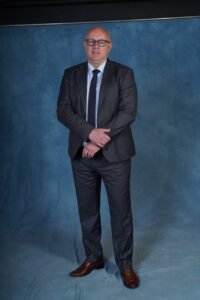
A ship’s condition is often assessed through inspections, reports, and the experience of the people responsible for keeping it running. But as maritime operations become more complex, technology creates new ways to monitor vessels and make decisions using timely information. For Krzysztof Dziarmaga, Co-founder and Chief Technology Officer of Smart Nautilus Ltd, the opportunity lies in connecting practical maritime knowledge with digital tools that can make operations more efficient, transparent, and sustainable.
Krzysztof is a maritime technology leader whose work spans digital transformation, subsea operations, remote inspection technologies, and the development of solutions for the maritime industry. Throughout his career, spanning roles from seafarer to Technical Superintendent, he maintained a strong interest in emerging technologies. After founding his own company, he focused on helping shipowners, operators, and other maritime stakeholders leverage data and technology to enhance vessel efficiency, ensure regulatory compliance, and optimize asset management.
As CTO and Co-founder of Smart Nautilus, Krzysztof leads the company’s technology strategy, product development, and innovation roadmap. Its solutions bring together technologies such as the Internet of Things (IoT), underwater robotics, environmental monitoring, AI-driven analytics, digital reporting, and real-time decision-support tools. The aim is to give vessel operators clearer, more continuous insight into their assets, supporting a shift from periodic inspections towards proactive, data-informed management.
A significant part of his work involves remotely operated vehicle (ROV) technologies and underwater inspection systems. These tools can support hull inspections, asset integrity assessments, and condition-based maintenance. Krzysztof’s areas of expertise include monitoring vessel hull conditions, inspecting propellers and rudders, assessing biofouling, managing marine growth, and using digital survey reports to help operators understand the condition of their vessels.
Biofouling has been a particular focus. Marine growth on a vessel’s hull can affect fuel consumption, greenhouse gas emissions, performance, and regulatory compliance. Krzysztof has helped develop technology-based approaches that support ongoing monitoring, earlier detection, and better-informed maintenance decisions. Through Smart Nautilus’ digital ecosystem, operators can gain a clearer picture of hull conditions, plan maintenance, and respond to evolving international requirements related to biofouling management.
His work also reflects the growing role of environmental responsibility in maritime operations. By connecting inspection data, monitoring systems, and digital reporting, technology can help operators understand the effects of their decisions and identify opportunities to improve how vessels are maintained and managed. For Krzysztof, these capabilities are part of a wider shift towards safer and more sustainable operations.
Beyond product and technology development, he has worked to build partnerships across Europe, Australia, New Zealand, the US, and other maritime regions. He supports collaboration among technology providers, vessel operators, regulators, research institutions, and service organizations, recognizing that practical solutions often require expertise from across the industry. These partnerships have been involved in areas such as environmental monitoring, maritime digitalization, smart inspections, asset integrity, and intelligent reporting.
Krzysztof’s approach brings operational experience and emerging digital capabilities together. His focus is on turning complex information into useful insights for people responsible for vessels and marine assets. As the maritime sector continues to adopt automation and real-time intelligence, he remains committed to developing tools that support greater operational transparency and help stakeholders make informed decisions.
Through his role at Smart Nautilus, Krzysztof continues to contribute to the development of intelligent shipping and marine asset management, with an emphasis on connecting technology to the everyday needs of maritime operations.
LinkedIn |
From Storytelling to Brand Success | Seher Farooq

As the UAE remains a global business hub, leaders like Seher Farooq are reshaping women’s leadership in the region. As Founder and CEO of XO Consultancy Dubai, she has helped establish the company as a trusted name in the industry. Through her creative vision and eye for the right opportunities, Seher’s impact as an entrepreneur is an inspiration for the next generation of women leaders.
Bringing years of experience across F&B and Hospitality, Seher’s offers a unique blend of strategic planning and creative thinking. As a boutique luxury hospitality marketing agency, XO Consultancy has been transforming the way brands connect, grow, and influence across hospitality, F&B, fashion, retail, and lifestyle industries. As a one-stop solution for all marketing and communications needs, the company’s keen eye for detail is what makes it different from the rest.
As one of the leading creative marketing agencies in Dubai, XO Consultancy has supported some of the major restaurant and nightlife launches, including Amelia Dubai, Float, and Gatsby Dubai. Driving high-impact campaigns for well-known names in the industry, spanning from Voyage by Amelia to Monkey Bar, to fashion campaigns with Manel Fashion and influencer driven campaigns with NYKAA and Sephora, Seher’s effective leadership has shaped the consultancy.
The team of experts at XO Consultancy collectively brings years of experience and an equal passion for leaving behind a positive impact. With a personalised approach, these industry experts and creatives reflect their commitment to customer-centric and innovative solutions.
Launching XO Talent to represent artists, creators, and public figures across the entertainment and media field aligns with Seher’s vision to expand the company. Recently, the platform even signed Lailli and Alizey Mirza, stars of the Netflix show Desi Bling.
Recognising its excellence in the field, XO Consultancy has been awarded multiple awards and honors, including Hospitality Digital Agency at the Pro Chef and Hospitality Awards 2025. Parallel to this, Seher has even earned three consecutive listings in Caterer Middle East’s F&B PR Power List, marking her as an influential marketing voice in the UAE.
Today, as XO Consultancy reimagines consultancy for brands in the UAE, Seher Farooq continues to lead the company forward growing every sector it works with.
LinkedIn | Instagram | XO Consultancy
Dr. Erfan Nejabat | Turning Technical Ideas into Executable Business Opportunities
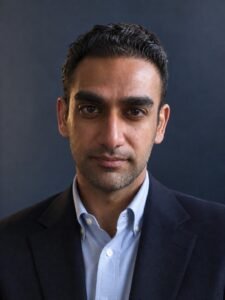
The most interesting careers are not always built around one industry. Some are shaped by the ability to move between different fields, understand how they connect, and recognise where an idea can become a practical opportunity. Erfan Nejabat has built his professional journey around that kind of versatility, working across technology, management, investment, and international business.
Erfan is an entrepreneur, management consultant, and technology strategist with experience spanning automotive technology, artificial intelligence, investment, project management, and international business development. He currently serves as a Management Consultant (MC) at Software Motion (SW-Motion), where he contributes to strategic management, technology development, and international automotive projects.
His background combines technical understanding with an interest in the business side of technology. This has allowed him to work on projects where engineering knowledge needs to be matched with planning, investment, and execution. With more than 10 scientific and technical articles published internationally, he has also contributed to technical and research-oriented discussions through his published work.
Automotive technology remains an important part of Erfan’s professional work, particularly through his involvement with ADAS and related technologies. His work in this area sits alongside broader interests in artificial intelligence and emerging technology. Rather than limiting his interests to one technology, however, his career has expanded into several areas where technology and business intersect.
His professional activities extend into ventures and investments involving gold and jewellery business development, AI-based applications, fuel transportation, and China-international chip supply chains. He has also acted as a financier and strategic supporter for different startup concepts and emerging business opportunities. These experiences have given him exposure to businesses at different stages, from early ideas requiring support to projects that need structured planning and development.
Project management is another important part of his work. Erfan has managed and coordinated projects across diverse fields, including medical and tourism initiatives, AI applications, and biomechanical approaches. Working across such different areas requires an ability to understand a project’s underlying objective, identify what needs to be done, and bring the relevant elements together.
His professional activities also include LIEC legal support and consulting, Project Management Consultancy (PMC), business development, and international technology partnerships. These areas have added an international dimension to his work, particularly as technology businesses increasingly operate across multiple markets.
For Erfan, working across borders involves more than technical knowledge. Projects also require an understanding of partnerships, investment, business development, planning, and execution. His experience across these areas allows him to approach projects from several perspectives rather than viewing them only through a technical lens.
What connects Erfan’s different areas of work is the combination of technical knowledge, financial perspective, strategic management, and cross-border business development. His career demonstrates how experience in one area can become useful in another, whether that means applying technology to a business problem, identifying an investment opportunity, or helping develop an international partnership.
His professional journey continues to develop across industries, with a focus on structuring complex opportunities and helping move ideas from concept towards implementation.
Prof. Dr. Joseph Peebles | A Journey Built on Persistence, Purpose and Global Ambition

Success rarely arrives in a straight line. For some people, it is built through years of steady progress, while for others, the journey is marked by unexpected turns, challenges, and opportunities that gradually shape the person they become. For Sir, Prof. Dr. Joseph Peebles, President and CEO of Peebco Energy Group, persistence has remained a central part of that journey.
His recent achievement adds another milestone to an already extensive list of professional and academic accomplishments. Prof. Dr. Peebles has taken part in his second major international business and intellectual competition, competing on a global stage alongside some of the strongest participants in the field. The achievement reflects his continued interest in business, leadership, and intellectual development.
His journey has included recognition from a number of organisations and institutions over the years. On June 13, 2021, Dr. Peebles was among the recipients of the Catholic Man of the Year recognition within the St. Louis Catholic Archdiocese. The recognition marked one of several milestones that would follow in the years ahead.
Education has also remained an important part of his development. On June 25, 2024, he graduated from Harvard University’s two-year H-BAP Leadership Program. Later that year, on September 4, he was accepted into Seton Hall Law School for International Business Compliance and Regulations.
His professional and institutional affiliations continued to grow. On November 10, 2024, Dr. Peebles was inducted into The Royal Society of St. George, followed by his appointment to the United Nations Association on November 26. On January 21, 2025, he was accepted into the American Bar Association.
The academic side of his journey reached another milestone on August 22, 2025, when Dr. Peebles earned his PhD in International Trade & Finance. He later earned a Professorship in International Literature on February 15, 2026, adding another dimension to his academic pursuits.
Alongside these achievements, his work has also received international recognition. On May 19, 2021, Prof. Dr. Joseph Peebles, PhD received an international nomination for an International Peace Ambassador.
The year 2026 brought several significant moments. On May 21, Prof. Dr. Peebles won first place in an international business competition, receiving recognition as the Global Business Innovation & Sustainability Leader of the Year. The achievement placed his work in business and sustainability on an international platform.
Just over a month later, on June 29, 2026, he received the Business Leadership & Excellence Award for Top International Chairman & Chief Executive Officer. On August 31, 2026, he was also awarded an international certificate recognising him among the Global Business Icons to Follow in 2026.
For Dr. Peebles, however, these milestones appear to represent more than a collection of titles and awards. His own reflections place greater emphasis on the resilience required to keep moving forward when the path becomes difficult.
“Over time, hard work does pay off,” Sir Joseph states. “Yes, there will be bumps in the road along the way. There will be failures to launch, and there will be detours within the journey.”
That understanding of perseverance forms an important part of his outlook. He points to versatility, adaptability, and the determination to remain engaged in the competition as qualities that help people navigate difficult periods.
His ambitions also extend beyond personal achievement. Through his work, he says his journey has always been connected to providing for both the planet and the greater good of its inhabitants. That broader purpose gives his business and leadership journey another layer, linking professional ambition with a desire to contribute to something beyond the individual.
The road ahead will undoubtedly bring its own challenges, but Dr. Peebles’ story so far is one of continued movement. From education and professional development to international recognition and business competition, each milestone has added another chapter to his career.
Perhaps the philosophy that best captures his outlook comes from the French saying he uses at the end of his reflection: “Après la pluie, le beau temps”, or, after the rain, the good weather comes. For Dr. Peebles, it is a reminder that difficult periods do not have to define the destination.
LinkedIn | Website | Transrailnet | Live Streaming Network
Geoffrey Spooner | Turning Field Experience into the Future of Building Intelligence

What if the people who spend years fixing buildings are the ones best placed to rethink how those buildings are understood?
For Geo Spooner, Founder and CEO of CoreTherm Aerial, the answer began long before the idea of a technology company. Nearly three decades spent working across construction, facilities, property operations, and the built environment gave him a close view of how buildings are actually built, operated, repaired, and maintained. His experience was shaped by construction sites, rooftops, mechanical rooms, and job trailers, not by Silicon Valley or a laboratory.
That background became the foundation for a different kind of entrepreneurial journey.
Geo is FAA Part 107 certified and a licensed thermographer, bringing together practical experience with technical knowledge of the built environment. Over the years, he began noticing that some of the biggest opportunities were often hidden inside problems that an industry had simply become accustomed to accepting.
That realization led to CoreTherm Aerial.
The company was founded around a straightforward but ambitious idea: physical assets should have an engineering memory. Buildings produce vast amounts of information throughout their lifetimes, but much of that information remains scattered across photographs, reports, spreadsheets, service records, and the knowledge of individual people.
Geo sees an opportunity to change that.
CoreTherm combines radiometric thermal data, engineering intelligence, and artificial intelligence to create a deeper understanding of how physical assets change over time. The goal is not simply to collect more information, but to make that information useful to owners and operators before small problems turn into expensive capital events.
For someone who spent much of his career seeing these challenges firsthand, the idea is deeply connected to his own experience. Technology, in this case, is not being developed simply because it is new. It is being developed because Geo has seen a real problem from the ground level and believes there is a better way to address it.
But CoreTherm is only one part of his story.
His path to entrepreneurship has included mistakes, risks, failures, and rebuilding. There have been chapters he is proud of and others that brought lessons that no classroom could have provided. Rather than separating those experiences from his leadership journey, Geo sees them as part of what shaped the way he operates today.
That perspective has given him a practical view of leadership. He believes conviction matters, but so does speed. Accountability matters, but so does the willingness to challenge familiar ways of doing things. For him, entrepreneurship is not about accepting that something has always been done a certain way. It is about having the courage to ask whether it still needs to be done that way.
This mindset is particularly important in an industry where many processes have developed over decades. Buildings are long-term assets, and decisions made today can affect their performance and costs for years. Bringing better information into those decisions could change how owners think about maintenance, repairs, and capital planning.
At 47, Geo does not see himself as someone reaching the end of an entrepreneurial journey. Quite the opposite.
“I’m 47 years old, and I genuinely believe I am just getting started.”
That statement captures much of what defines his approach. He is not interested in building another company simply for the sake of calling it successful. His ambition is larger: to build something that can change the way an entire industry thinks about its physical assets.
Perhaps the most revealing part of his story is that he does not consider knowing everything to be his greatest strength. His advantage, he believes, came from something much simpler: curiosity.
“My greatest advantage was never that I knew everything.
It was that I was never afraid to ask why everyone else accepted it.”
That question sits at the heart of Geo Spooner’s journey. From construction sites and rooftops to building CoreTherm Aerial, his career has been shaped by looking closely at problems that others may have learned to overlook. Now, he is bringing that same mindset to the intersection of thermal data, engineering, and AI, with the ambition of helping the built environment become more intelligent, more proactive, and better prepared for what comes next.
Yves Marc Ouffoue | Building Africa’s Next Private Aviation Network

In private aviation, the journey begins long before an aircraft takes off. Finding the right aircraft, matching it to a client’s needs, coordinating with operators, and navigating the realities of different African markets all require experience and strong relationships. Yves Marc Ouffoue, known as Marc, has built nearly 15 years of that experience across the African aviation industry, and today he is using it to build a stronger network for private jet brokerage on the continent.
An Ivorian aviation entrepreneur and private jet brokerage expert, Marc has developed his expertise entirely within the African market. His career has involved working closely with operators across passenger aviation, cargo logistics, and specialised aviation support missions, including military-related operations in selected African countries.
That experience has given Marc a close view of how the African aviation market works and where there is room to improve the way private aviation services are connected and delivered. At 37, he is now taking that experience into entrepreneurship with a focus on strengthening the role of African brokers.
One of his key ventures is The Black Jet Brokers (BJB), a pan-African network created exclusively for jet brokers based on the continent. The idea behind BJB is to bring together the knowledge, connections, and reach of African brokers and turn them into a stronger collective force.
Marc’s vision is centred on supporting the growing mobility needs of Africa’s elite and institutional stakeholders. By creating a more connected brokerage community, he aims to help brokers improve service standards, respond more efficiently, and handle high-level travel requirements with greater ease.
The initiative also reflects his belief that African brokers should have a stronger role in shaping the continent’s private aviation market. Rather than relying entirely on networks outside Africa, BJB is designed around the people and businesses already operating within the continent.
Marc is also leading Empty Legs Africa, an initiative focused on promoting and monetising empty-leg flights across, to, and from Africa. These flights create an opportunity to make use of aircraft that would otherwise travel without passengers, potentially opening new revenue opportunities for both brokers and operators.
For Marc, the initiative is about finding value in an existing part of private aviation while improving access to aviation solutions across the continent. It adds another dimension to his work, connecting commercial opportunity with a more efficient use of available aircraft capacity.
Both ventures come from the same underlying idea: Africa’s private aviation industry has significant potential, but that potential can be strengthened through better connections, stronger local networks, and a deeper understanding of the continent’s unique requirements.
As he continues developing The Black Jet Brokers and Empty Legs Africa, his focus remains firmly on Africa. His ambition is to empower the continent’s brokers, create new opportunities for operators, and contribute to a private aviation ecosystem that is better connected and better equipped to serve the people and institutions driving Africa’s growth.
For Yves Marc Ouffoue, the future of private aviation in Africa is not simply about more aircraft in the sky. It is about building the relationships and networks on the ground that make those journeys possible.
LinkedIn | Website LinkedIn | Website WhatsApp
Hanan Al-Shayeb | Leading Fintech Growth Across Markets

The financial world has evolved during the past two decades. Payments have moved online, digital banking has increased, and new types of financial technology have opened up previously inaccessible markets. Hanan Al-Shayeb has spent more than 25 years navigating these shifts, founding companies and directing teams in fintech, payments, digital assets, e-commerce, and regulated financial services.
As a C-level executive, Hanan has worked across MENA, Europe, Africa, and other international markets. Her experience combines business growth with the practical side of running financial services businesses, including regulation, partnerships, market expansion, and day-to-day execution.
Today, she serves as the DFSA-authorised CEO/SEO of Altery, where she brings together commercial goals and strong governance. Her experience in regulated financial services has given her a clear understanding of the care and responsibility required when building businesses in complex markets.
Before Altery, Hanan held senior leadership roles at companies including Paytiko, Bybit, OPay, JollyPay, Souq.com, and Bayt.com. Across these roles, she has led international teams, entered new markets, developed partnerships, and helped businesses achieve double- and triple-digit growth.
Her work covers a wide part of the financial technology sector, from payments and digital banking to cross-border financial solutions, acquiring and issuing, and digital asset infrastructure.
What stands out in Hanan’s career is her focus on turning plans into results. Growth, in her view, is not simply about having a good idea. It also requires the right people, strong partnerships, careful planning, and the ability to execute.
That approach has helped her build payment ecosystems and lead businesses through periods of change. Working across different regions has also given her experience with markets that have their own customers, regulations, business cultures, and challenges.
Her career has earned recognition through several awards, including Women Rising in Fintech – UAE 2025, Excellence in Women’s Leadership – FinTech 2026, and Visionary Fintech & Payments CEO of the Year – 2026.
Beyond her executive roles, Hanan is involved with organisations supporting women and the wider fintech community. She is a member of the MENA Fintech Association, WOMENCHOICE.ORG, and the Dubai Business Women Council (DBWC). She also gives back through mentorship as a Mentor at Ignyte.
Hanan believes that generating possibilities for individuals and businesses is intimately related to leadership. Her expertise in a variety of sectors and geographical areas has given her insight into the potential for significant change when technology, sound strategy, and capable leadership are combined.
Today, she continues to focus on fintech and the future of financial services. She continues to work on building responsible, adaptable and sustainable businesses that can grow from MENA to international markets.
Her journey is a career built around change. In a world of constant change, Hanan Alshayeb is determined to help shape what’s next in financial services through growth, innovation and hands-on leadership.
LinkedIn | Website | WOMEN CHOICE |
Conclusion
The Top 10 Innovative Leaders featured here come from different backgrounds, but their stories share a common thread. They have been willing to question the usual approach and create their own definition of success.
Their journeys remind us that progress does not always come from following a proven path. Sometimes, it starts with the decision to take a different one.
Also Read :-