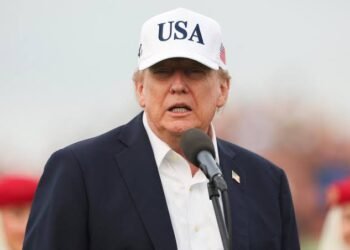

There will be discussions on a variety of topics with leaders from 11 Brics countries, including host India, China, Russia, Brazil, South Africa, the United Arab Emirates, and Iran. Saudi Arabia has been invited. Few, however, will have as much of an influence as President Trump’s initiatives. Global energy markets have become unstable due to the conflict in Iran and the constant threat of White House tariffs, which are aimed at both US allies and enemies. This has frequently left the world economy uncertain about the future.
The leaders of Brics are gathering against this backdrop. However, it is unlikely that the group would come up with a consensus statement that publicly criticises the US or outlines a coordinated plan to oppose the geopolitics and policies of President Trump. This is partially due to the intense disagreement within Brics on the extent to which it should confront Washington.Michael Kugelman, a senior fellow at the Atlantic Council, told the BBC that “India cannot afford to have a joint statement that rails against Washington.” He anticipates that any criticism of US policy will be “vague and indirect” in order to represent the stark differences in the interests of the larger group.
The geopolitical circumstances within the Brics are likely to make it challenging for the organization to take a more assertive stance against President Trump, despite pressure from Russia and Iran. India, which is supposedly nearing the end of a trade agreement with the United States, won’t want to make a remark that would anger the White House. China might also be concerned about being perceived as targeting Washington through Brics.
Also Read:
GDP Growth in India Defies the Oil Shock, But it Also Generates Controversy
Matthew Leesbourne | Building Businesses That Put People First